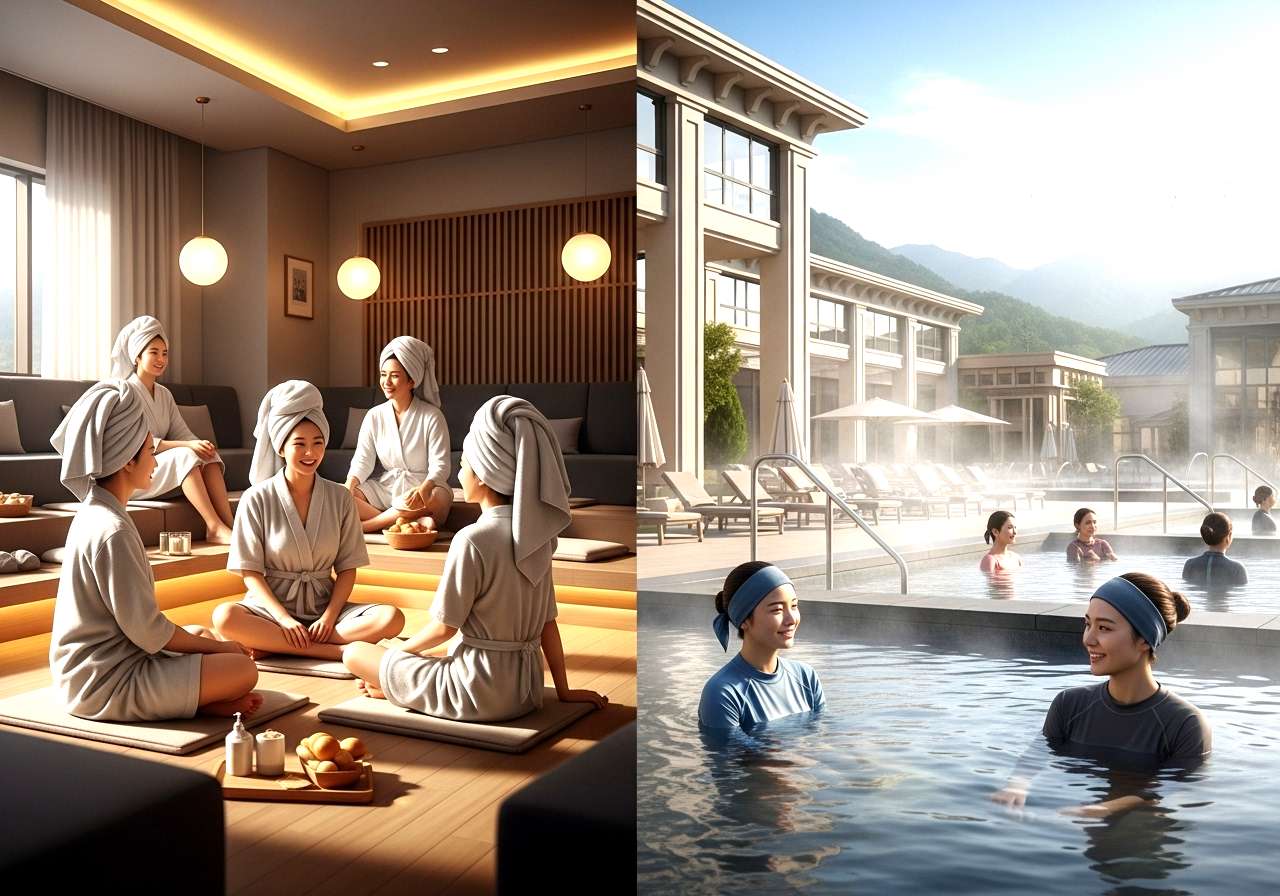
There are few experiences as fundamentally Korean as a trip to the local “Jjimjilbang” (찜질방). It is not merely a sauna; it’s a sprawling, affordable, 24-hour entertainment and relaxation complex. Part spa, part community center, and part budget accommodation, the Jjimjilbang is an absolute must-try for any visitor.
But what exactly is a Jjimjilbang, and how does it relate to the therapeutic “Oncheon” (온천, hot spring) resorts scattered across the peninsula? We dive into the cultural rules of the famous Korean bathhouse and guide you toward the most mineral-rich hot springs in the country.
Part 1: The Jjimjilbang Experience – A Cultural Institution 🛁
The word “Jjimjilbang” literally translates to “heated room.” While the term is often used interchangeably with bathhouse, a Jjimjilbang is actually an evolution of the traditional “Mokgyoktang” (목욕탕, public bathhouse).
The Two Zones: Bathing vs. Communal
Every Jjimjilbang is divided into two distinct zones, and understanding them is crucial for a comfortable visit:
- The Wet Area (Mokgyoktang): This section is strictly gender-segregated and requires complete nudity. This area houses the hot, warm, and cold soaking tubs, the wet saunas, and the shower stations. You must wash thoroughly before entering any tub.
- The Dry Area (Jjimjil Zone): This area is “co-ed” and requires you to wear the comfortable, provided uniform (usually a t-shirt and shorts). This is the social space, containing themed dry saunas (like charcoal, salt, or jade rooms), communal resting rooms, snack bars, and sleeping quarters.
Must-Try Jjimjilbang Rituals
- Sikhye and Baked Eggs: The ultimate Jjimjilbang snack is a combination of “Sikhye” (식혜, a sweet, chilled rice drink) and “Maekbanseok” eggs (맥반석 계란, eggs slow-baked in the sauna’s heat until they have a unique, smoky flavor).
- The Scrub (Seshin or Ttaemil-i): For the smoothest skin you’ll ever experience, book a professional body scrub from an “ajumma” (auntie) in the bath area. It’s intense, thorough, and highly recommended.
- The Lamb Head Towel: Roll one of your small provided towels into the iconic “lamb head” shape (양머리) for fun and to look like a local in the heated communal rooms.
Do not worry about the nudity in the segregated bath areas. It is the cultural norm, and locals are focused on their own cleansing rituals. Always shower completely before entering the baths, and remember: No photos or phones are allowed inside the wet areas.
Part 2: Korea’s Best Natural Hot Springs (Oncheon) 🏞️
While Jjimjilbangs focus on dry saunas and social relaxation, “Oncheon” refers specifically to resorts and facilities built around natural, mineral-rich hot springs. Historically, Korean kings recuperated at these sites, believing in their potent healing properties.
Korean hot springs are typically developed complexes, often including large water parks, luxury spas, and hotels, making them ideal family destinations. Here are some of the most famous and highly-rated:
Top Destinations for Therapeutic Soaking
- Hurshimchung Grand Spa (Busan): Often cited as Asia’s largest hot spring-fed spa, this massive facility features over 40 distinct thermal pools. It is part of a large hotel complex in the city of Busan and is famous for its diverse seasonal bath varieties and huge clay dome.
- Bugok Hot Springs (Gyeongsangnam-do): Known for boasting the hottest water in Korea (reaching up to 78°C) and for being a natural sulfur spring. The unique smell is a sign of its rich sulfur content, believed to be excellent for skin conditions.
- Paradise Spa DOGO (Asan): A large leisure spa facility that utilizes the natural hot spring waters of the region. It’s perfect for families, featuring a mix of tranquil indoor hot spring pools and fun outdoor water slides and theme pools.
- Sanbangsan Carbonate Hot Springs (Jeju Island): A rare and highly recommended option, this is a carbonate hot spring. The carbon components are said to enhance blood circulation and provide therapeutic benefits, all set against the stunning volcanic scenery of Jeju.
The Healing Water Types
Korean hot springs often highlight the specific mineral content of their waters:
- Alkaline Water: Common, known for making skin smooth.
- Sulfur Water: Less common, recognizable by its smell, popular for treating skin ailments.
- Carbonate Water: Rare, known for stimulating blood circulation.
Conclusion: Embrace the Heat and the Culture
Whether you seek the full, immersive, 24-hour cultural experience of a Jjimjilbang, or a restorative weekend retreat at a mineral-rich Oncheon resort, Korea offers a perfect place to relax. From the bustling energy of a city bathhouse to the tranquility of a mountain spring, these facilities are essential to understanding Korean wellness and community life.
Pack a bag, leave your shyness at the door, and get ready for a uniquely Korean kind of rejuvenation.







Leave a Reply