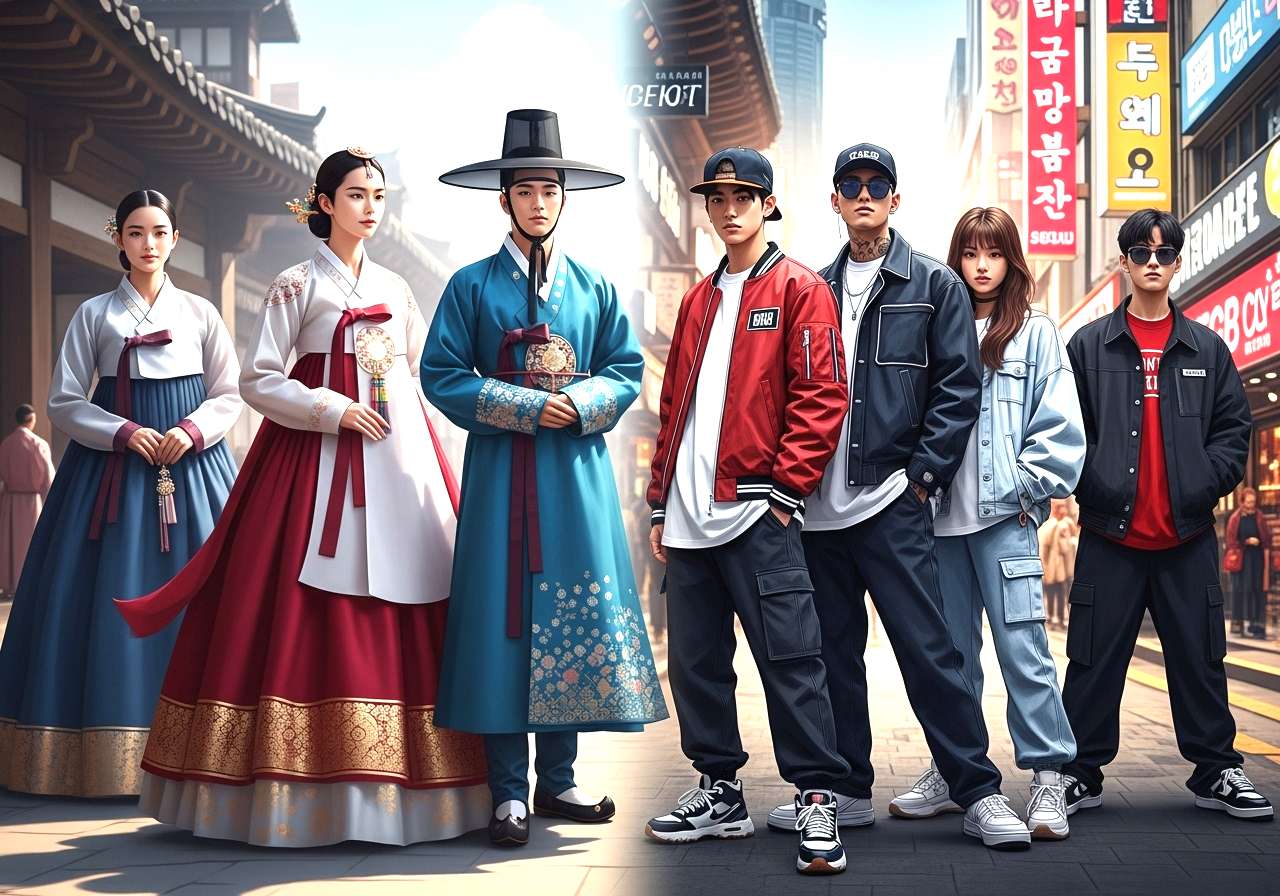
Have you ever been completely mesmerized by the fashion in a K-drama or a K-Pop music video? Maybe you’ve seen a traditional Korean Hanbok and wondered about its history. I certainly have! 😊 What we call K-Fashion today isn’t just a fleeting trend; it’s a dynamic, centuries-long conversation between tradition and modernity.
From the simple, voluminous lines of the Joseon Dynasty’s formal wear to the bold, gender-fluid looks dominating Seoul’s runways, Korean style is a global force. In this comprehensive guide, we’ll dive deep into that evolution, showing you how South Korea’s traditional attire, the Hanbok, laid the foundation for the revolutionary street style we know and love today.
The Enduring Elegance of Hanbok: A Cultural Icon 🇰🇷
The Hanbok (한복, meaning ‘Korean clothes’) is the original cornerstone of K-Fashion. You’ve likely seen it in historical dramas—known for its vibrant colors, simple straight lines, and the women’s signature “chima” (치마, voluminous skirt) and “jeogori” (저고리, short jacket).
It’s not a single fixed style, though. Historically, the design evolved to reflect social status, age, and marital standing, with every fold and color carrying profound Neo-Confucianist meaning.
What truly sets the Hanbok apart from Western clothing is its flat-cut, two-dimensional construction. Unlike drapes that fit the body precisely, Hanbok garments are cut and sewn flat, creating a generous, flowing silhouette that only truly comes to life when worn. It’s an architectural wonder, in my opinion!
The goreum is the ribbon tie on the jeogori jacket. It’s often tied into a simple one-looped bow and is a signature element that has remained consistent in Hanbok design for centuries, regardless of gender or social status.
The Great Transition: Blending Traditional Roots with Modern Life 📈
The 20th century brought massive changes to the Korean peninsula, including the rapid influx of Western-style clothing. Suddenly, the Hanbok was no longer the primary attire; it was relegated to ceremonial events like weddings, funerals, and traditional holidays.
This shift created a cultural vacuum, but also an incredible opportunity for Korean designers to innovate. Pioneers like Nora Noh in the 1950s and ’60s began mixing local aesthetics with global silhouettes, setting the stage for what was to come.
| Feature | Traditional Hanbok | Modern Hanbok (Daily Hanbok) |
|---|---|---|
| Occasion | Ceremonial (Weddings, Festivals) | Daily Wear, Special Events, Photoshoots |
| Fabric | Silk, Ramie, Hemp (Hand-Wash Only) | Cotton, Rayon, Machine-Washable Blends |
| Silhouette | Longer skirt (ankle-length), formal fit | Shorter skirts, tailored pants, more fitted jackets |
Hallyu’s Influence: K-Fashion Takes the Global Stage 🌐
Fast-forward to the 21st century: the rise of Hallyu (한류, the Korean Wave) has solidified Seoul’s status as a global fashion capital. But it’s not just designers like Lie Sang Bong showcasing at Paris Fashion Week. The real revolution is happening on the streets.
Modern K-Fashion is characterized by several key traits: oversized silhouettes, bold layering, and a perfect mix of high-end and affordable brands. Street districts like Gangnam and Hongdae are living runways where youth culture dictates the trends, which are then amplified globally by K-Pop idols.
Case Study: Hanbok in K-Pop 🎤
The Hanbok hasn’t been forgotten—it’s been reinvented! Brands like Leesle and Danha have modernized the look, turning the classic Hanbok into stylish, everyday dresses, jackets, and shirts. Groups like BTS and BLACKPINK have famously worn these modern iterations in music videos and on stage, propelling the traditional garment into the international spotlight and proving that heritage can be supremely trendy.
Quick K-Fashion Style Decoder 🔢
Click the button to reveal a core styling rule in contemporary K-Fashion!
Ultimately, K-Fashion is all about expressing individuality while maintaining a high standard of aesthetic and quality. It’s a captivating cultural statement that I believe will continue to evolve and inspire designers worldwide.
Key Takeaways: A Quick Recap 📝
Before you step out with your own K-Fashion inspired look, here are the core points to remember about this incredible style journey:
- Hanbok is the Foundation: The traditional Korean dress, with its flat cut and elegant lines, is the historical and artistic root of modern K-Fashion.
- Modernization is Key: Designers like Leesle have made Hanbok wearable for daily life, blending tradition with contemporary comfort.
- Hallyu is the Amplifier: K-Pop and K-dramas have propelled unique Korean street style and designer aesthetics onto the global stage.
K-Fashion’s Core DNA
Frequently Asked Questions ❓
K-Fashion is a powerful testament to how a nation’s history can shape its future. It’s an exciting mix of ancient artistry and futuristic street sensibility, and I hope this guide has inspired you to explore its nuances! What’s your favorite K-Fashion trend, and have you ever tried wearing a modern Hanbok? Let me know in the comments below! 😊









Leave a Reply